

How to Apply for Provisional Licence in the UK (2026 Step-by-Step Guide)

Getting your provisional licence is the first real step to driving on UK roads. If you have been putting it off because it looks hard, it is actually far easier than most people think and knowing exactly what to do from the start saves you time, money and unnecessary back-and-forth with the DVLA. This article takes you through how to apply for provisional licence from scratch who can apply, what documents you need, how much it costs and what to do the instant it lands. This covers every process, whether you’re applying online or by post. What Is a Provisional Licence and Why Do You Need One? A provisional licence is your legal permission to drive on UK public roads while you’re still learning. Without it, you cannot take driving lessons, sit your theory test, or practice driving with a qualified supervisor. It’s the starting point for every new driver in the UK there’s no way around it. Think of it as your learner’s permit. It doesn’t mean you can drive alone, but it gives you the official right to get behind the wheel with the right supervision in place. You also need it to book your driving theory test through the DVSA, so getting it early makes the whole process run smoother. What Age Can You Apply for a Provisional Licence? You can apply for a provisional licence from the age of 15 years and 9 months. However, you cannot drive on the road until you turn 17. For mopeds, you can ride on public roads from age 16, once you’ve completed your Compulsory Basic Training (CBT). Most people don’t know about the 15 years and 9 months rule. Applying early means your licence is ready and waiting the moment you turn 17 so you can start lessons on your birthday if you want to. That’s a small tip that saves weeks of waiting. Vehicle Type Minimum Age to Apply Minimum Age to Drive on Road Car 15 years 9 months 17 years Moped 15 years 9 months 16 years (after CBT) Motorbike 15 years 9 months 17 years What Documents Do You Need for a Provisional Licence? Before you start your application, get these together: Valid UK biometric passport (if you have one, this is the easiest option) National Insurance number (if you know it it’s not always required but speeds things up) Proof of identity if you don’t have a biometric passport (birth certificate, for example) All addresses where you’ve lived over the last three years A colour passport-style photograph (for postal applications only) You must also confirm you’re medically fit to drive. If you have a medical condition that could affect your ability to drive safely, you may need to declare it to the DVLA separately. How to Apply for a Provisional Licence Online Applying online through GOV.UK is the fastest and cheapest way. The online provisional licence cost is £34, and your application is submitted immediately no postal delays, no forms to fill out by hand. Here’s exactly how it works, step by step: Go to GOV.UK and search “apply for a provisional driving licence” Sign in or create a Government Gateway account Enter your personal details — name, date of birth, address history Provide your National Insurance number if you have it Upload or confirm your passport details (the DVLA checks your photo automatically via your passport) Confirm you meet the medical and eyesight standards Pay the £34 fee by debit or credit card Submit your application That’s it. You’ll receive a confirmation email, and your licence typically arrives within one week. Important: Do not use third-party websites that offer to apply on your behalf. Some charge significantly more than the official £34 fee, and your application may not even reach the DVLA properly. Always go directly to GOV.UK. Can I Apply for a Provisional Driving Licence by Post? Yes, you can apply for a provisional driving licence by post by completing a physical D1 application form, which is readily available at most major Post Office branches or through the official DVLA form ordering service. While digital paths dominate, the postal route remains a vital alternative if you don’t possess a biometric passport or prefer physical paperwork. Where to Find a D1 Application Form Visit your local Post Office and ask for a D1 driving licence application form. If your local branch does not have it in stock, you can order the paperwork to your house via the DVLA online. If you live in Northern Ireland, a different approach applies: you will need to request and complete the DL1 form and Northern Ireland paperwork instead of the usual D1 booklet. DVLA Swansea Postal Addresses and Fees The postal route carries a higher processing fee, setting you back £43. You must pay this using a cheque or postal order made payable to the DVLA; sending cash through the post is strictly prohibited. You must also include an original identity document and a physical, color passport-style photograph that meets strict biometric standards. Once finished, mail your package to the dedicated processing hubs in Wales: DVLA, Swansea, SA99 1AD (If all your identity documents were issued within the UK) DVLA, Swansea, SA99 1AF (If any accompanying identity documents originated outside the UK) Postal applications require deep patience, frequently taking up to three full weeks to be verified, printed, and returned. Eyesight Standards for a Provisional Licence To get a provisional licence, you must be able to read a car number plate from 20 metres away in bright daylight. If you need glasses or contact lenses to read the road ahead, then you must wear them when you drive – no exceptions. It’s not just a formality. At the beginning of your practical driving test, the examiner will ask you to read a number plate of a parked automobile. If you can’t do it, you fail the test straight away, and the DVLA is told. Your licence can be revoked. Before you start lessons, it is a
Driving Test Tips to Pass First Time (London Guide 2026)

Pass rates are a dismal story. Fewer than half of trainees across the UK pass their practical test at the first attempt, with the pass rate falling significantly lower at crowded London test sites. The problem is that if you go into the session unprepared, you’ll probably have to reschedule at a high cost. Before the key turns in the ignition, you go correcting small, systematic marking faults. The secret sauce is combining real DVSA marking measurements with a good understanding of your local road layouts. This guide provides you with the exact technical preparation, danger awareness, and on-the-day templates you need to ensure you pass the first time. How to Pass Your Driving Test Quickly The fastest route to a pass isn’t rushing your test date it’s making every lesson count. Learners who take two-hour lessons consistently tend to progress faster than those doing short one-hour sessions. Longer sessions give the brain time to absorb skills properly before switching off. Booking your test before your instructor says you’re ready is the single biggest mistake candidates make. It wastes money, knocks confidence, and statistically, second attempts don’t always go better without targeted practice in between. Work with your instructor on your weak spots specifically not just clocking hours. 10 Essential Driving Test Tips to Pass First Time 1. Exaggerate Your Mirror Checks The most prevalent source of minor errors in UK driving tests is poor observation. Check your mirrors every time before you signal, before you change speed, and before you change position on the road. Check by moving your head visibly. The examiners are taught to distinguish between a rapid eye dart and a conscious head-turn check. If you want to be safe, gently whisper “mirrors” under your breath every time you check. Strange way to do it, but it develops the habit fast. 2. Have a Lesson on Test Day Morning Book a one-hour lesson on the morning of your test. It settles the nerves, warms up your driving, and gives you a last chance to ask your instructor about anything that’s been sitting in the back of your mind. Going cold into a test after days off driving is a risk not worth taking. This is especially important in London where road conditions are unpredictable. A warm-up session around the test centre area is worth more than an extra hour of revision the night before. 3. Use Your Instructor’s Car Your instructor’s car is already test-ready. It has dual controls, additional mirrors, and meets every DVSA requirement. More importantly, you know that car. You know where the rear window heater is, where the fog lights are, and how the clutch bites. The “Show Me, Tell Me” questions at the start of your test will feel far easier in a familiar vehicle. 4. Know the Show Me, Tell Me Questions The examiner will ask one “tell me” question before you drive and one “show me” question during the drive. Getting these wrong counts as a minor fault which adds up. Practice the full DVSA list of 2024/25 questions with your instructor until you can answer them without thinking. Common ones include demonstrating the horn, explaining how to check tyre pressure, and showing how to clean the windscreen. 5. Take Your Instructor Along You don’t have to take your instructor into the test with you but you can, and it often helps. They sit silently in the back and cannot interfere, but having a familiar face can ease the pressure. If you do fail, your instructor can give feedback beyond what the examiner says on the sheet. 6. Ask the Examiner to Repeat Instructions If you mishear a direction, ask the examiner to repeat it. It is not embarrassing. It is far better than guessing and turning the wrong way. Examiners expect this and it won’t count against you. Stay calm if it happens. A clear head is worth more than a perfectly clean run to that point. 7. Don’t Assume You’ve Failed Mid-Test You’re allowed up to 15 minor faults and still pass. Stalling unless it happens in a dangerous situation is a minor fault. Missing a gear change is a minor fault. These things feel huge in the moment but the test isn’t over. The candidates who fail are often the ones who mentally give up after a small error and stop concentrating properly. Keep going as if every metre matters. 8. Choose Your Test Time Carefully Avoid booking a test during morning or evening rush hours if your nerves are already a factor. Mid-morning slots between 10am and 12pm tend to have lighter traffic in most London areas. That said, your instructor will know what works best around your specific test centre. Don’t book your test during a week when other major stressors exams, work deadlines, family events are happening. A distracted mind is a disadvantage before you’ve even started the engine. 9. Review the Highway Code Before Test Day There’s often a gap of several months between passing the theory test and sitting the practical. Road signs, rules, and stopping distances can fade from memory in that time. Spend 30 minutes the week before your test going over common road signs, give-way rules, and speed limits. The DVSA’s official Highway Code app makes this quick and simple. 10. Listen Carefully at the End Whether you pass or fail, the examiner’s feedback at the end of the test is some of the most specific driving advice you’ll ever receive. Take it seriously. If you pass, note what was flagged it’ll make you a safer driver. If you don’t pass, every detail the examiner shares is a direct roadmap for what to fix. Practical Driving Test Tips From the Top 10 Failures The DVSA compiles exact registration data detailing why millions of learners fail each year. Analyzing this list shows that the same mechanical omissions repeat across every test centre. DVSA Failure Category Specific Mechanical Error Safe Practical Correction Junction Observations Pulling out before checking both
Can You Drive a Car Without MOT?

You spot the MOT expiry date a little too late. Maybe the warning slipped your mind. Maybe life got busy. Then the panic hits. Can you drive a car without MOT and still stay on the right side of the law? The short answer is yes, but only in limited situations. UK law allows a legal exemption if you’re driving to a pre-booked MOT test or repair appointment. Outside those exceptions, driving without MOT can lead to fines, penalty points, insurance trouble, and even a driving ban if the vehicle is unsafe. Driving Without an MOT What’s the Risk? You face a significant financial and legal risk if you operate a vehicle on public roads after your test certificate expires. Under Section 47 of the Road Traffic Act 1988, driving a vehicle without a valid Ministry of Transport certificate is a strict liability road traffic offence. This legal standard means that a genuine oversight, a forgotten date, or an automated reminder failure will not prevent a conviction in court. The immediate consequence of an expired certificate goes beyond a simple paperwork issue; it instantly invalidates your primary vehicle insurance policy. Most UK underwriters insert clauses stating that the insurance policy remains valid only if the vehicle is kept in a roadworthy state, which a valid test certificate officially proves. If you get into an accident without one, your insurer can legally refuse to cover third-party claims or personal vehicle damage, leaving you entirely liable for thousands of pounds in repair costs or medical bills. Furthermore, an unverified vehicle compromises general vehicle safety, putting your passengers and other road users in direct danger. Undetected mechanical faults like thinning brake pads, worn suspension bushes, or small exhaust leaks can lead to sudden component failure while travelling at high speeds. Can I Drive My Car Without an MOT If It Is Booked In? Yes you can drive a car without a valid MOT certificate if you’re travelling directly to a pre-booked MOT appointment. The vehicle must be insured, and you should take the shortest reasonable route. You cannot use this exemption for general driving or unrelated errands. This is the one legal exception most drivers know about, but the conditions matter. You need to have a real booking in before you go. If you are stopped and cannot prove you have a booked appointment, you risk a fine. Also, check your insurance policy before you go. Some insurers won’t cover the car being driven to a test center without a valid MOT. A short call or look online before you go will save a much bigger headache down the road. One more thing: even if you have a legitimate booking, if a police officer decides your car is too worn out, has broken lights, or serious body damage, they can still take action. A booking is a legal excuse to be on the road, not an immunity card. Driving Your Car After Failing an MOT The legal rules change dramatically if your vehicle undergoes an official test and fails the inspection. You cannot automatically drive the vehicle away from the test centre just because your previous certificate has a few days left before expiry. Your legal status depends entirely on the severity of the faults discovered by the vehicle technician. +————————————————————-+ | MOT FAILURE SUMMARY TABLE | +———————-+————————————–+ | Defect Classification| Can You Drive the Vehicle? | +———————-+————————————–+ | Minor Fault | Yes (Fix as soon as possible) | +———————-+————————————–+ | Major Fault | Only if old certificate is in date | | | and no dangerous faults exist | +———————-+————————————–+ | Dangerous Defect | NO (Strictly illegal to drive) | +———————-+————————————–+ Dealing with a Dangerous Defect If the inspection report lists even a single item under the Dangerous category, the vehicle is legally grounded. A dangerous classification indicates that the vehicle poses an immediate, significant risk to road safety or the environment. It is a severe statutory offence to drive a dangerous vehicle under any circumstances, even if you are traveling to a repair shop down the road. The garage does not possess the physical authority to confiscate your keys or lock your car away. However, they will issue an official refusal certificate which uploads instantly to the national database. If you choose to ignore their warnings and drive onto a public road, you risk facing the absolute highest tier of traffic penalties. The only legal method to move a dangerous vehicle is to arrange for professional recovery, ensuring the car travels with all four wheels lifted complete. What Vehicles Are Exempt from Needing an MOT? Not every vehicle in the UK requires an annual MOT test. There are specific legal exemptions worth knowing about especially if you drive a classic, adapted, or specialist vehicle. Vehicles that don’t need an MOT include: Cars manufactured before 1 January 1960 (rolling classic exemption) Vehicles used only on private land and never driven on public roads Some agricultural vehicles, such as tractors Certain adapted vehicles for disabled drivers (check with the DVLA directly) New vehicles under three years old (four years in Northern Ireland) If you’re unsure whether your vehicle qualifies for an exemption, contact the DVLA directly. Don’t assume assumptions are expensive on public roads. What Is the Penalty for Driving With No MOT? Driving without a valid MOT is a road traffic offence that carries a fine of up to £1,000. If the vehicle is also considered dangerous, the fine increases to up to £2,500, and you could receive penalty points or a driving ban. Here’s how the penalties break down clearly: Offence Maximum Fine Penalty Points Driving Ban Driving without a valid MOT £1,000 None by default Possible in
Manual vs Automatic Car: Which One Should You Actually Choose?

Most drivers pick a side and they don’t really know why. You may have heard “manual gives you more control” or “automatic is easier,” and wondered which is true for you. Manual vs automatic automobile is one of the most googled questions for new drivers in the UK, and the answer isn’t the same for anyone. The quick answer is this: The manual vs automatic car option really relies on where you drive and what licence you want. If you’re learning in London or another hectic metropolis, automatic is generally the more sensible choice for day-to-day driving. But if you want full flexibility on the licence, studying manual provides you with more licence. This article looks at everything from cost and petrol to the driving exam and driving in city traffic, so you can make an informed decision. What’s the Difference Between a Manual and Automatic Car? You have a clutch pedal and a gear stick on a manual car, so the driver is responsible for every gear change. An automatic car does this all by itself you just select Drive, Reverse or Park. There is no clutch pedal, and the gearbox changes gear automatically depending on your speed. The mechanics behind each are quite different. A manual gearbox connects the engine to the wheels through a clutch plate press the clutch, select a gear, release the clutch smoothly, and you’re moving. It takes practice, but once it clicks, it feels natural. An automatic uses one of three systems: a torque converter (most common in older automatics), a dual-clutch transmission (DCT/DSG used by Volkswagen and others for faster shifts), or a continuously variable transmission (CVT —common in hybrids). All three shift gears without driver input. Should I Buy an Automatic Car? An automatic car is the right choice if you want an easier, more relaxed drive especially in heavy traffic. You won’t stall, hill starts are stress-free, and you keep both hands on the wheel at all times. It suits commuters, nervous drivers, and anyone who prioritises comfort over driver involvement. Here’s where automatics genuinely shine: The downsides? Automatics are generally more expensive to buy and can cost more to insure (more on that below). And if you only pass in an automatic, your licence is restricted you can’t legally drive a manual car on UK roads. Should I Buy a Manual Car? A manual car gives you more control, often costs less to buy, and comes with full licence flexibility. If you pass your test in a manual, you can drive both manual and automatic cars with no restrictions. It’s the more versatile choice long-term. Manual cars suit drivers who: The flip side is real though. Manuals require more concentration, especially for new drivers juggling clutch control, mirrors, and road awareness at the same time. Stalling is a genuine risk. Hill starts take practice. And in stop-start city traffic, working the clutch constantly is genuinely tiring on your left leg. Can I Drive a Manual Car with an Automatic Licence? No. If you pass your driving test in an automatic, your UK licence is restricted to automatic vehicles only. Driving a manual car on a public road with an automatic-only licence is illegal. To remove this restriction, you must pass another practical test this time in a manual car. This is one of the most important facts to understand before choosing which type of lessons to take. The DVSA makes this very clear: an automatic licence does not cover manual vehicles. The reverse, however, is not a restriction. Pass in a manual and you can legally drive both types automatic and manual on UK roads. That’s why many driving instructors and the DVSA itself recommend learning in a manual if you’re unsure which you’ll end up driving long-term. Cars with Manual and Automatic Gearbox Choices Most popular cars in the UK come with both options. Here are a few examples: Car Model Manual Available Automatic Available Volkswagen Golf Yes (6-speed) Yes (DSG 7-speed) Ford Puma Yes Yes (7-speed auto) Toyota Yaris Yes Yes (CVT hybrid) Nissan Juke Yes Yes (dual-clutch) Volkswagen Polo Yes Yes (DSG) The trend is shifting. Premium brands like Ferrari and Porsche have largely moved away from manual options entirely. Even everyday cars like the Volkswagen Polo now push automatic variants heavily. The number of manual-only models available in the UK is shrinking year on year. Manual vs Automatic: Driving Experience This is where personal preference matters most. The difference between manual and automatic isn’t just mechanical it changes how driving actually feels. Manual drivers often describe the experience as more rewarding. You’re actively part of the process choosing the right gear for the right moment, using engine braking to control speed on descents, feeling connected to how the car performs. For longer motorway drives or winding country roads, many drivers prefer that involvement. Automatic drivers, particularly in cities, describe the experience as simply less stressful. No clutch means one fewer thing to think about. Gear change paddles on newer automatics (like those on DSG-equipped cars) let you take manual control when you want it giving you, arguably, the best of both options. Manual vs Automatic: Fuel Economy Modern automatics are no longer the fuel-guzzlers they used to be. Older automatic gearboxes with three or four speeds were genuinely less efficient than manuals. Today’s eight or nine-speed automatics and especially hybrid CVTs are often just as fuel-efficient, sometimes more so. The old rule (manual = better mpg) no longer holds across the board. Driving style plays a bigger role than gearbox type. A manual driver who rides the clutch or revs unnecessarily will burn more fuel than an automatic driver with smooth habits. That said, as a general guide: The auto vs manual transmission fuel debate is becoming less relevant as cars become more Manual vs Automatic in London: Which Is Better for City Driving? Automatic automobiles do offer a real-world benefit for driving in London specifically. In London, I feel bothered when you stop,
What Is the Reason for Failing a Driving Test?

Failing the UK practical driving test is more common than most people think, and if you’ve been there, you’re far from alone. What is the reason for failing a driving test? In most cases, it comes down to a handful of repeated, fixable mistakes that examiners see every single day. The good news?? Once you know exactly what they are, you can target them in your lessons and dramatically increase your odds. In this guide, we cover the top 10 reasons for failure as approved by the DVSA, the difference between fault types, specific pitfalls on London roads and actionable fixes you can use straight away. Whether you are studying for your first attempt or coming back after a fail, this is the only breakdown you need. How Many People Fail Their Driving Test in the UK? More than half of all UK learner drivers fail their practical test. According to the latest DVSA data (2024/25), the national pass rate sits at around 48.5%, meaning roughly 51.5% of candidates walk away with a fail sheet. In 2025 alone, almost 976,000 learners sat the test but fewer than 477,000 passed. That’s not a comforting statistic if you’ve got a test coming up. But here’s the thing: most of those failures come down to the same small group of mistakes. The DVSA publishes its fault data every year, and the top 10 reasons barely change. That pattern tells you something useful these are learnable, correctable errors. In London, the picture is even starker. Pass rates at some test centres drop well below the national average. Chingford sits at just 36.5%, Barking is similarly low, and Belvedere comes in at around 38%. By contrast, Sidcup passes 59% of candidates over 20 percentage points higher than the hardest London centres. Understanding why people fail is the first step to making sure you don’t become part of the statistic. What Is the Difference Between a Minor, Serious and Dangerous Fault? Before we get into the specific reasons people fail, it’s worth understanding how driving faults are actually categorised. There are three types: a driving fault (minor), a serious fault, and a dangerous fault. You can collect up to 15 minor faults and still pass. One serious or dangerous fault is an automatic fail no exceptions. Here’s how the DVSA defines each: The same driving mistake can fall into different categories depending on context. Stalling on a quiet side street is usually a minor. Stalling halfway across a busy junction is likely serious. Stalling and rolling into oncoming traffic is dangerous. The distinction matters, and your examiner applies professional judgement in real time. Top 10 Reasons for Failing the Practical Test in 2026 The DVSA publishes annual failure data covering all UK test centres. The list below reflects the top 10 for the 2024/25 financial year and as the DVSA’s own records show, these reasons have stayed almost identical for five consecutive years. That consistency confirms these aren’t random errors. They’re deeply ingrained habits that most learners develop without realising. 1. Not Making Effective Observations at Junctions Poor junction observation is the single biggest reason for failing the UK driving test, according to DVSA data and it’s held that top spot for years. Ineffective observation was a factor in 47% of all road collisions in the UK in 2025, which is exactly why examiners take it so seriously. This fault covers a range of mistakes: looking too late before pulling out, misjudging the speed of an approaching vehicle, not checking for cyclists at the left, or entering a roundabout when a car is approaching from the right. The common thread is that the candidate looked, but didn’t actually process what they saw. A practical fix is the “creep and peep” technique at restricted-view junctions. Edge forward slowly until you can see clearly in both directions, pause, check again, then move if it’s safe. Make your head turns visible and deliberate examiners can only credit what they can see you doing. 2. Not Using Mirrors Correctly When Changing Direction This is the second most common fault on UK practical tests. Failing to check mirrors before signalling, changing lanes, turning, or exiting a roundabout puts other road users at risk and tells the examiner your situational awareness isn’t where it needs to be. The Mirror, Signal, Manoeuvre (MSM) routine exists precisely to solve this. It should feel automatic by the time you sit your test not something you consciously remember to do. The most frequent version of this fault is not checking the exterior mirror when exiting a roundabout, which can cause a vehicle in the next lane to slow or swerve. Think of it this way: your mirrors are a live feed of what’s happening around you, and every time you change direction, that feed needs refreshing. If you’re only glancing in the interior mirror and skipping the exterior, you’re leaving a significant blind spot unchecked. 3. Not Having Proper Control of the Steering Steering control covers everything from crossing hands on the wheel to mounting the kerb. It accounts for around 15% of all test faults. The DVSA specifically flags steering too late on bends, oversteering on tight turns, and losing control during manoeuvres as the most common forms of this fault. The pull-push steering technique taught in your lessons is there for a reason it keeps both hands near the wheel at all times and reduces the risk of losing control mid-turn. Crossing your arms won’t automatically fail you, but it’s marked as a fault because it compromises your ability to react quickly. The errors that show up most in steering faults are tight right turns into minor roads (steering too late) and repeated kerb contact when pulling up on the left. Both are fixable with deliberate, slow practice. 4. Incorrect Road Positioning When Turning Right at Junctions Positioning when turning right is the fourth most common reason for failing. This includes waiting too far left (blocking following traffic), approaching a right turn in
How to Book Driving Theory Test in the UK (2026 Step-by-Step Guide)

Booking your driving theory test feels like a big deal because it is. It’s the first official checkpoint on the road to your full UK driving licence, and getting it wrong (wrong documents, wrong site, wrong timing) can cost you both money and weeks of waiting. If you’ve been searching for a clear, no-nonsense walkthrough on how to book a driving theory test, you’re in the right place. In short, you book your theory test online immediately at the official DVSA website at gov.uk, using your provisional driving licence number, a valid email address and a debit or credit card. The cost of the test is £23. We’ll walk you through all the steps below, what to watch for and how to make sure you pass the first time. When Can You Book a Driving Theory Test? You can book your theory test as soon as you hold a valid provisional driving licence. Slots open on a rolling basis, typically up to six weeks in advance. Popular test centres especially in London fill up fast, so it’s worth booking the moment you feel close to ready. Don’t wait until you feel 100% perfect. Most learners who delay booking end up pushing their entire learning timeline back by weeks. Book your slot, then use the countdown as motivation to study harder. Keep checking the DVSA booking portal if your preferred date isn’t available. Cancellations happen regularly, and slots can open up at short notice, often early on Monday mornings. How Old Do You Have to Be to Book the Theory Test? You have to be 17 years old to take the vehicle theory exam in the UK. But if you receive the higher rate of the mobility component of Personal Independence Payment (PIP), you can take the exam and begin driving at 16. Technically, you can book the test before your birthday as long as the appointment is on or after your 17th birthday. You must be 16 years old if you’re applying for a moped or light quad bike. For most of you reading this, the magic number is 17. Don’t forget you can’t perform your practical test until you’ve passed the theory, so doing this early is vital. How Much Does a Driving Theory Test Cost? The theory test fee for a standard car test is £23, paid directly to the DVSA. Motorcycle theory tests cost the same. Always book through the official GOV.UK website third-party booking sites often charge extra fees on top of the standard cost. Test Type Official DVSA Fee Car Theory Test £23 Motorcycle Theory Test £23 ADI Part 1 (Theory) £55 LGV / HGV Theory Test £26 What Documents Do You Need to Book the Theory Test? To book your theory test, you need three things: your UK provisional driving licence number, a valid email address, and a debit or credit card. That’s it. No other documents are needed at the booking stage. At the test centre on the day, bring your photocard provisional driving licence. The old paper-style licence is not accepted. If you arrive without it, you’ll be turned away and lose your test fee so double-check the night before. How to Book a Driving Theory Test Step by Step This is the part most guides skip over or make too vague. Here’s exactly how the DVSA booking process works. Step 1: Go to the Official DVSA Website Head to gov.uk/book-theory-test. Don’t use any other site. The official page is free to use and takes about five minutes to complete. Step 2: Enter Your Provisional Licence Details You’ll need your full UK driving licence number. This is the long reference number on the front of your photocard licence. Enter it exactly as it appears no spaces. Step 3: Add Your Personal Details The DVSA will ask for your name, address, date of birth, and contact telephone number. Make sure these match what’s on your provisional licence exactly. Step 4: Request Special Support (If Needed) If you have a disability, reading difficulty, or health condition, the DVSA offers support options at this stage. This includes extra time, a voiceover, or a translator. Don’t skip this if it applies to you. Step 5: Choose Your Test Centre Select the test centre closest to you. In London, there are several options across different boroughs. Choose one that’s easy to get to you don’t want transport stress adding to test-day nerves. Step 6: Pick Your Date and Time Browse the available slots and choose what works for you. If nothing looks right, check back regularly. Slots update frequently. Step 7: Pay and Confirm Pay the £23 theory test fee by debit or credit card. Once payment goes through, you’ll get a confirmation email. Save it. That email contains your test date, time, centre address, and booking reference. How to Book a Theory Test in London If you’re based in London, you’ve got more test centre options than most but also more competition for slots. London is one of the busiest areas for theory test bookings in the UK. Popular Theory Test Centres in London Choose the centre closest to where you live or where you take your driving lessons. This keeps things familiar and cuts down on travel stress Current Waiting Times in London (2026) Region Typical Wait Time Central London 20+ Weeks Outer London 16-18 Weeks Home Counties 8-12 Weeks Scotland / Wales 4-6 Weeks Can You Book the Theory Test and Practical Test at the Same Time? No. The DVSA requires you to pass your theory test first before you can book your practical driving test. You’ll need your theory test pass certificate number to reserve a practical test slot on the GOV.UK website. Once you pass your theory, you have two years to also pass your practical. If that window closes without a pass, you’ll need to sit the theory test again no extensions are available. How to Change or Cancel a Theory Test Booking Life happens. If you need to move
How to Drive an Automatic Car: A Complete Step-by-Step Guide for Beginners
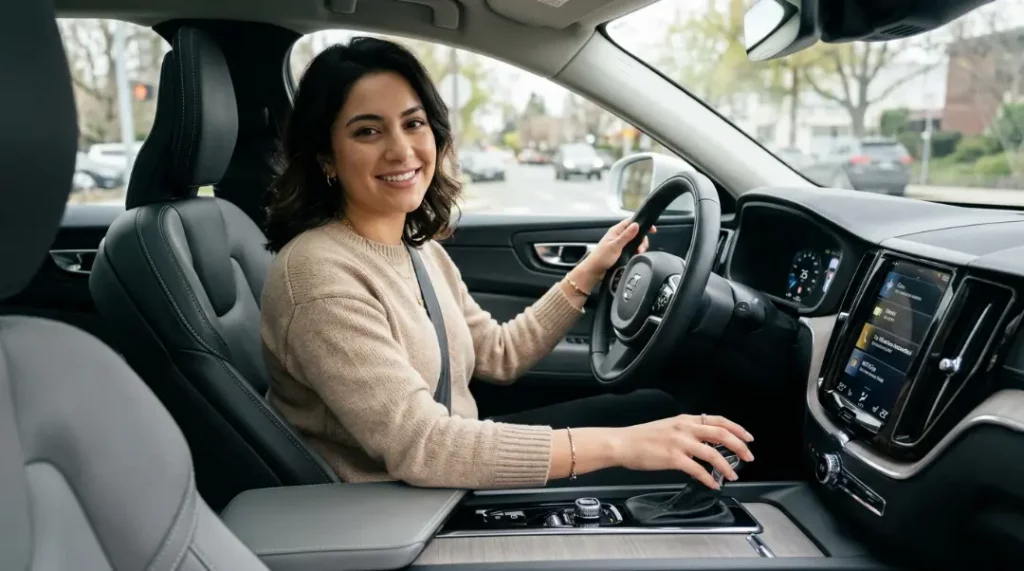
Driving a manual car feels like patting your head and rubbing your belly at the same time. Coordinating the clutch, gear lever, accelerator, and brake all at once is genuinely difficult and it’s one of the main reasons so many learners are switching to automatic. If you’re here because you want to know how to drive an automatic car, you’re in the right place, and the answer is simpler than you probably think. This book will show you everything from how to get behind the wheel for the first time to how to start on a hill, how to use the gear selection, how to prevent frequent mistakes, and how to tell what kind of gearbox you have. In conclusion, you’ll know exactly what to accomplish in a simple and useful way. No technical language. No nonsense. Only the real deal. How Do Automatic Cars Work? Automatic cars change gears for you. Instead of using a clutch pedal and gear lever to manually shift between first, second, third, and so on, the gearbox reads your speed and engine load then selects the right gear automatically. The result? You only have two pedals: a brake (on the left) and an accelerator (on the right). There’s no clutch pedal at all. This is why driving an automatic car is considerably easier to pick up than driving a manual. Most automatic gearboxes use a gear selector with four main positions: P (Park), R (Reverse), N (Neutral), and D (Drive). Some also include S (Sport) and L (Low). Here’s what each one does: Selector What It Does P – Park Locks the transmission. Use only when the car is fully stopped and you’re getting out. R – Reverse Same as reverse in a manual. Use to drive backwards. N – Neutral Disconnects the engine from the wheels. Rarely needed; avoid using it while moving. D – Drive The gear you’ll use for all forward driving. The car shifts gears automatically. S – Sport Keeps the car in lower gears longer for faster acceleration. Useful on motorways. L – Low Limits the car to lower gears. Good for steep hills or towing. Automatic Car Pedals: What You Need to Know Before you start the engine, get familiar with what’s at your feet. An automatic car has just two pedals: brake on the left, accelerator on the right. Use only your right foot for both pedals. This is non-negotiable. Using your left foot on the brake while your right foot is on the accelerator is a common mistake that can cause sudden, dangerous braking or unintended acceleration. Think of it like using a single remote control with two buttons your right foot is in charge, full stop. How to Start an Automatic Car: Step-by-Step Guide Starting an automatic car is straightforward, but there’s an order to follow especially for first-timers. Step 1: Sit in the driver’s seat, adjust your mirrors, and fasten your seatbelt. Step 2: Make sure the gear selector is in P (Park). Most automatics won’t start unless it is. Step 3: Press your right foot firmly down on the brake pedal (the left-hand pedal). Step 4: Turn the key or press the start button to fire up the engine. Step 5: With your foot still on the brake, move the selector to D (Drive) if going forward, or R (Reverse) if going backwards. Step 6: Release the handbrake (this is usually a lever or button near the gear selector). Step 7: Gently lift your foot off the brake. The car will start to creep forward slowly; this is completely normal. It’s called the “creep function” and it helps with low-speed manoeuvring. Step 8: When you’re ready to move, press gently down on the accelerator with your right foot. How to Stop and Park an Automatic Car: Step-by-Step Guide Stopping is just as important as starting. Here’s how to do it cleanly. Step 1: Take your foot off the accelerator and move it to the brake pedal. Step 2: Apply steady, gradual pressure to slow the car down. The gearbox will automatically shift down through the gears as your speed drops. Step 3: Once the car has stopped fully, keep your foot on the brake. Step 4: Move the selector to P (Park). Step 5: Apply the handbrake. Step 6: Turn off the ignition. One important note: always move the selector to P before removing your foot from the brake. If you release the brake while still in D or R, the car can creep forward or backwards unexpectedly. How to Do a Hill Start in an Automatic Car Hill starts cause a lot of anxiety for beginners but in an automatic, they’re actually easier than in a manual. When facing uphill: Apply the handbrake, shift to D, then slowly release the brake while pressing gently on the accelerator at the same time. The car will hold its position and move forward smoothly. When facing downhill: Apply the handbrake, shift to D, release the handbrake, and ease off the brake gently. Gravity helps here don’t over-accelerate. Many modern automatic cars come with Hill Start Assist (HSA), a built-in feature that holds the brakes for a second or two after you lift your foot. This prevents rolling and gives you time to move from brake to accelerator without panic. The Different Types of Automatic Gearboxes Not all automatics are built the same. When you’re driving an automatic car, the type of gearbox under the bonnet affects how the car feels and performs. Traditional Torque Converter This is the most common type. It uses hydraulic fluid to transfer power from the engine to the wheels, replacing the clutch. It’s smooth and reliable you’ll find it in most SUVs and luxury cars like the Range Rover and Volvo XC90. Continuously Variable Transmission (CVT) CVT gearboxes don’t use fixed gears at all. Instead, a belt-and-pulley system creates a seamless range of ratios. You’ll find CVTs in many hybrid cars like the Toyota Prius and Yaris. They’re fuel-efficient
What Information Would Be Shown in a Triangular Road Sign?
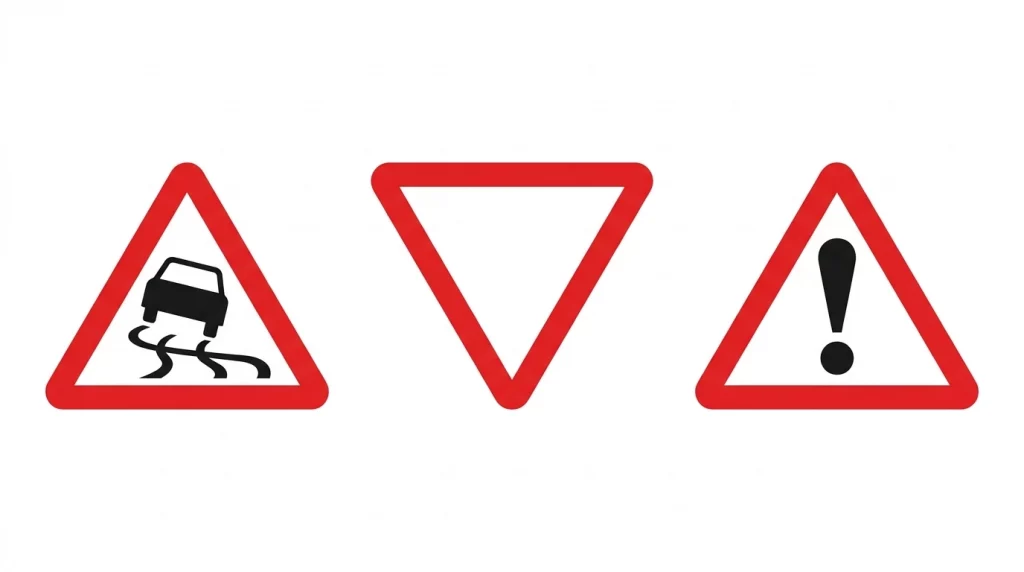
At first, road signs can be hard to understand. Colours, shapes, and symbols all have meanings. If you’ve looked up what information would be in a triangular road sign, you probably want to understand one important rule before your driving lessons or theory test. Here’s the short answer. Triangular road signs tell you about dangers or hazards that are ahead. They warn you about dangerous things like turns, intersections, or slick roads so you can slow down and stay safe. You’ll learn what they mean, why they matter, and how to spot them right away in this guide. The Three Categories of UK Road Signs Before focusing on triangular signs specifically, it helps to understand where they sit in the bigger picture. UK road signs follow a simple shape-based system defined by the Highway Code. Here’s how the three shapes break down: Circular road signs give orders. Red-bordered circles tell you what you must NOT do, such as “no entry” or “no overtaking.” Blue circles tell you what you MUST do, like “turn left ahead.” Ignoring a circular sign is breaking the law. Triangular road signs give warnings. They alert you to hazards ahead so you can adjust your speed and driving behaviour. Almost all triangular warning signs have a red border. Rectangular road signs give information. Blue rectangles appear on motorways, green ones on primary roads, and white ones on minor roads. They guide you rather than instruct or warn. This shape logic is one of the first things DVSA tests in the theory exam, so it’s worth locking in early. What Information Would Be Shown in a Triangular Road Sign? In the UK, triangular road signs warn drivers about dangers, changes to the road layout, or bad weather ahead. They are red with white backgrounds and look like equilateral triangles. The symbol inside each sign tells you what kind of danger it is. They don’t tell people what to do. All triangular signs have the same look: a white or yellow background, a red border, and a black symbol in the middle. The warning is carried by the symbol, which is what changes. Some signs use pictograms, like a skidding car for a slippery road. Others use text or numbers, like gradient percentages on steep hill signs. A few use arrows to show how the road layout changes ahead. There’s one important exception worth noting: the Give Way sign. It’s a triangular sign but it’s inverted (pointing downward). This is intentional. Even if the sign is covered in snow or partially damaged, its upside-down shape still communicates its meaning. What Information Is Shown on Circular Signs? Since learners often mix up sign shapes, it’s worth briefly covering circular signs too, as knowing the contrast helps you remember triangular signs better. Red-bordered circular signs prohibit. Common examples include speed limits, no entry signs, and no overtaking signs. The no entry sign UK is one of the most recognisable: a red circle with a white horizontal bar. It means no vehicles may enter, including cycles and buses. Blue circular signs instruct. They tell you to do something positive, like follow a one-way system or take a mandatory route. These are commands, not suggestions. Speed road signs showing maximum limits (like 30, 40, or 50 in a red circle) are circular for this exact reason: they’re orders, not warnings. When you see a number in a red circle, you are legally required to stay within that limit. The Give Way Sign Explained The Give Way sign is arguably the most important triangular sign on UK roads. It’s an inverted red triangle, sometimes with the distance to the junction printed below, or with “Give Way” written inside the sign itself. When you see it, the road you’re joining has priority over the other traffic. You have to wait for a safe space before pulling out. This sign often appears at T-junctions, crossroads, and roundabout entries. The sign is upside down compared to other warning signs for a practical reason: if snow, vandalism, or damage covers it up, drivers can still tell what it is by its unique downward-pointing shape. For decades, this has been a smart part of UK road design. The rules for giving way on the road mean that the Give Way sign has a lot of legal weight. If you pull out without giving way, you could get a fixed penalty notice or, worse, cause an accident. Complete List of Triangular Warning Signs in the UK Here’s a breakdown of the most common triangular warning signs grouped by category. Junction and Road Layout Signs T-junction sign: A T-shape inside a red triangle warns that a side road meets the main road ahead. Vehicles may be slowing or stopping to turn. Road narrows sign: Lines closing together inside a triangle warn that the road width reduces ahead. Check for markings to know which side narrows. Dual carriageway ends sign: Two parallel lines merging into one warn that a central reservation is ending. Expect oncoming traffic on your side of the road. Two-way traffic sign: Two arrows pointing in opposite directions warn you’re leaving a one-way road and entering a two-way system. Stay left and watch for oncoming vehicles. Pedestrian and Vulnerable Road User Signs Pedestrians in road ahead sign: A silhouette of an adult and child holding hands warns of pedestrians on or near the road ahead. Slow down and be ready to stop. School crossing patrol sign: Similar to the pedestrian sign but specifically near schools. Extra caution applies, especially during school hours. Road Surface and Condition Signs Slippery road sign: A skidding car silhouette warns of a road surface that’s slippery due to ice, water, or another hazard. Reduce speed and increase following distance. Road humps ahead sign: A humped surface inside a triangle warns of speed bumps ahead. A secondary plate usually indicates how many humps or over what distance. Steep hill downwards/upwards sign: A gradient percentage inside a triangle warns of a significant incline or
How to Become a Driving Instructor?
If you like teaching and driving, becoming a driving instructor is a logical choice. It has constant demand, flexible hours, and the ability to run your own business. Many people change jobs later in life and do well in their new ones. If you are wondering how to become a driving instructor, the process is structured but achievable. You have to have the correct mentality, the right training, and pass a set of approved tests. This guide breaks down each step in simple terms, so you know precisely what to expect and how to move forward with confidence. What is the real job of a driving instructor? A driving instructor does more than teach you how to drive. You help students learn how to stay safe for the rest of their lives. This includes creating lesson plans, tracking progress, and preparing students for real-life road dangers. You also need to be patient. Each student is unique. Some people need to feel confident. Others need things to be in order. Good teachers adapt their teaching to each student. Many teachers work at a driving school. Some people decide to work for themselves. Depending on your aims, either solution can work well. What You Need to Be a Driving Instructor in the UK You must follow the tight legal rules before you may apply. These keep standards high and protect students. These are the most important things that driving instructors need to have: You have to be at least 21 years old. You must have had a full UK driving license for three years. You need to pass a background check. You have to meet the eyesight requirements. People often ask how old you have to be to become a driving instructor. It’s easy to answer. You need to be 21 and have adequate driving experience to instruct safely. You can start training if you meet these requirements. A Simple Explanation of Driving Instructor Qualifications To teach people how to drive for money, you need to become an Approved Driving Instructor (ADI). This means passing three formal tests given by the DVSA. The same driving teacher qualifications are required all over the UK. Part 1: Test of Theory and Danger This test checks how well you know the rules of the road, safety, and how to educate. It has multiple-choice quizzes and videos that show how to spot hazards. You need to study hard. A lot of people don’t think this part is important. Part 2: Test of Driving Skills This test tests how well you can drive. The person giving the test wants a high level of quality. You need to prove that you can be cool, prepare ahead, and be safe. Your driving has to be superior to most people’s. This is not a test for students. Part 3: Test of Teaching Skills This is the last step. You need to prove that you can teach straightforwardly and safely. The person testing you observes you as you prepare a student. This part is all about safety, structure, and communication. You become an ADI if you pass all three parts. What Training You Need to Become a Driving Instructor You learn a lot more than just how to drive when you prepare to be a driving instructor. A good course covers how to teach, organize lessons, and handle risks. Most of the time, training includes: Coaching one-on-one Tests that are not real Training in how to structure lessons Basics of student psychology Advice on how to start a business Getting good training will increase your chances of passing the first time. What to Expect From Your Training Programme Your training program should feel organized and helpful. You should know what you are learning every week. Theories are the first thing most programs do. Then they learn how to drive. Later on, you’ll learn how to teach. Honest feedback is what good trainers do. They get you ready for the real test. You should never feel rushed or lost. At Pharez Driving School, the focus is on effective teaching, not quick fixes. Bill Plant Driving School: Training for Driving Instructors Bill Plant Driving School offers training for driving instructors. Many contenders choose well-known national providers. People commonly compare Bill Plant Driving School to other schools. Big schools have fixed programs and help with branding. Smaller schools often deliver more one-on-one help. Your learning style, budget, and long-term goals will help you choose the ideal option. Always ask about pass rates, help after you get your qualification, and the terms of the contract. hool What Driving Instructor Training Covers All of the main topics should be covered in a full course. These are more than just test questions. Important areas are: How to teach nervous students Taking care of lesson time How to handle mistakes safely Getting students ready for test stress Driving practices that are good for the environment Rules about how to act professionally These abilities will help you do well long after you get your degree. What You Need to Know About the Cost of Driving Instructor Training The cost of training to become a driving instructor varies widely. The length of the course, the trainer’s experience, and the quality of support all affect the price. Costs usually range from £1,500 to £4,000. Some services let you pay as you go. Some people offer comprehensive packages. Watch out for claims that you will pass. No one can promise outcomes. Always find out what’s included. Find out how many hours of training you get. See if the test fees are included. How to Apply to Be a Driving Instructor The first step in applying to become a driving instructor is to complete a form and submit it to the DVSA. You should also check your criminal record. You can book Part 1 once you get the go-ahead. You have 2 years to pass all 3 parts; after that, you have to pass all 3 parts. You might have to start
How to Book a Driving Test?
Booking a driving test sounds simple until the calendar shows no dates, the waiting list stretches for months, and every test centre near London looks full. Many learner drivers hit the same wall. They pass the theory test, feel ready to drive, then get stuck trying to secure a practical test slot. If you want to know how to book a driving test, the quickest way to book one is to use the official Driver and Vehicle Standards Agency booking service. You will need your provisional licence, a theory pass certificate, a payment card and a flexible attitude to test centres and dates. This guide takes you through the whole process, current DVSA rules, previous test strategies, common mistakes and what to do if no appointments come up. What You Need Before You Book You must have three things in place before booking a driving test: a valid UK provisional driving licence, a theory test pass certificate number, and a debit or credit card to pay the fee. If your theory test certificate has expired, you’ll need to retake it. There’s no way around this you cannot complete a practical test booking without a valid theory pass. Theory test slots are in high demand too, so book that first if you haven’t already. Here’s exactly what to have ready: UK provisional driving licence number Theory test pass certificate number Debit or credit card You don’t need a minimum number of lessons before booking. There’s no hour requirement set by law. However, the national average is around 45 hours of professional tuition plus 22 hours of private practice before most learners reach test standard. How Much Does It Cost to Book a Driving Test? The official DVSA fee for a weekday practical driving test is £62. Evening, weekend, and bank holiday tests cost £75. The theory test costs £23 separately. These prices are fixed by the DVSA and only apply when you book directly through GOV.UK. Any site charging more is a third-party reseller. Avoid them you’re paying extra for something you can get yourself for free. Test Type Fee Theory test (car) £23 Practical test (weekday) £62 Practical test (evening/weekend/bank holiday) £75 Extended test after disqualification (weekday) £113 Extended test after disqualification (weekend/evening) £134 These fees don’t include the cost of hiring your instructor or their car for the test. Always check with your driving instructor about their accompanying fee in advance. How to Book a Driving Test Step by Step (Official Method) The safest and fastest way to book is online through the official GOV.UK driving test booking service. Here’s how it works: Step 1: Go to GOV.UK and search “book driving test.” Make sure you’re on the official government site, not a third-party platform. Step 2: Enter your UK provisional driving licence number. Step 3: Enter your theory test pass certificate number. Step 4: Choose your preferred test centre. You can search by postcode. Step 5: Select your preferred date and time from available slots. Step 6: Pay the DVSA fee using a debit or credit card. Step 7: You’ll receive a confirmation email. Save this. The booking service runs daily from 6am to 11:40pm. During peak times, you may be placed in a virtual queue. New slots are released every Monday at 6am this is the main weekly drop for appointments up to 24 weeks in advance. These slots go fast, especially in cities like London, Birmingham, and Manchester. How to Book a Driving Test by Phone If you’d rather not book online, you can call the DVSA directly. DVSA booking line: 0300 200 1122 Hours: Monday to Friday, 8am to 4pm Phone booking is also the only way to arrange certain “upgrade” tests, such as moving from an automatic to a manual licence, or from a medium-sized lorry to a larger vehicle category. Important: New DVSA Booking Rules From May 2026 This is the section most learners don’t know about and it matters. From 12 May 2026, learner drivers must book their own practical driving tests directly. Driving instructors, driving schools, and third-party “cancellation” services can no longer book tests on a learner’s behalf. This is a major shift. Previously, many instructors booked tests through the DVSA business service, which gave them access to slots not visible to the public. That route is now closed for booking on behalf of pupils. Other key rule changes introduced in 2025: 10 working days’ notice is now required to cancel or reschedule a driving test without losing your fee. This increased from the previous three-day rule. After failing a test, learners must wait at least 14 working days before booking another attempt. This is designed to make sure candidates genuinely have time to improve. You can now reschedule your test up to six times before you have to cancel and rebook from scratch. The DVSA also launched a crackdown on bots and resellers who were bulk-booking slots and reselling them at inflated prices sometimes £200 above the standard fee. These practices are now actively penalised. Who Can Book My Driving Test? From May 2026, only the learner driver themselves can book a practical driving test. Instructors, driving schools, and third-party services are no longer permitted to book on your behalf. This rule exists to stop bulk-booking abuse and make the system fairer for everyone. If someone offers to book a test for you especially for an extra fee that’s a red flag. Scammers on WhatsApp and Facebook Marketplace have been known to charge learners up to £200 for slots they don’t actually control. Always book through the official GOV.UK service. It’s the only legitimate way. How Long Is the Driving Test Waiting Time? Waiting times across the UK have been a serious problem since the COVID-19 pandemic. Here’s the current picture: The average national waiting time as of 2025 is around 22 weeks. In busy London test centres, waits can stretch to 24 weeks or longer. To address this, the DVSA has: Hired 450 new examiners through a
